
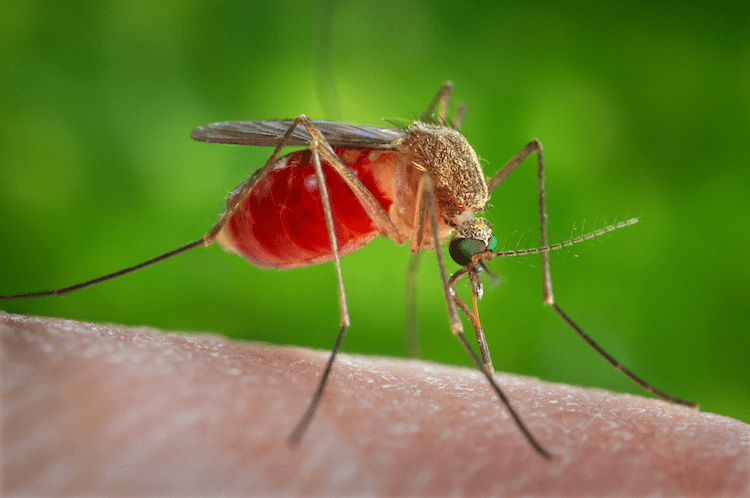
House mosquito
Culex spp
Mosquitoes of the genus Culex are distributed world-wide and belong to the subfamily Culicinae, which contains several medically important genera. Breeding sites of these mosquitoes are often in collections of water like puddles, ditches or rice-fields…
Collapse pest biology
Mosquitoes of the genus Culex are distributed world-wide and belong to the subfamily Culicinae, which contains several medically important genera. Breeding sites of these mosquitoes are often in collections of water like puddles, ditches or rice-fields but also man-made containers such as tin-cans, bottles or storage tanks. Medically important species like Culex quinquefasciatus or Culex pipiens pipiens prefer to breed in water that is polluted by organic debris such as rotting vegetation or human and animal excrement. Due to their preference for polluted water, larvae of this species are often found in sewer systems, septic tanks or pots containing non-drinkable water. Culex mosquitoes are vectors of filariasis caused by Wuchereria bancrofti or Brugia malayi and of different arboviruses that cause a number of encephalitis diseases as well as Rift-Valley and West Nile fever.
The females of C. quinquefasciatus as well as C. pipiens pipiens are nocturnal, so bite humans preferably in the evening hours or at night. The use of long lasting insecticide impregnated bednets (LLINs) can be an effective method to protect from mosquito bites. Also the use of indoor residual sprays (IRS) is effective, because Culex quinquefasciatus preferably rest indoors after taking a blood meal. Other control methods target the larvae by treating breeding sites with insecticides. Larviciding against Culex larvae often requires a higher dosage of insecticide, because many larvicides are less effective in water that contains organic pollution. Organophosphates and Insect growth regulators (IGRs) are the commonly used classes to treat the breeding sites of Culex mosquitoes as well as products containing Bacillus thuringensis israelensis or Bacillus sphaericus. Other ways of preventing breeding is the improvement and renewing of sanitation systems. Regular visual surveys of possible breeding sites and prompt treatment will aid control.
The WHO has published a resistance monitoring methodology based on a contact bioassay using impregnated filter-papers for adult mosquitoes. The methodology as well as the necessary equipment is available using the links below.

Key resources
Key references
| Reference | Year | Authors | Publisher |
|---|---|---|---|
| The function of two P450s, CYP9M10 and CYP6AA7, in the permethrin resistance of Culex quinquefasciatusVol. 7(1):587. DOI: 10.1038/s41598-017-00486-0. | 2017 | Gong Y, Li T, Feng Y, Liu N | Scientific Reports |
| Test procedures for insecticide resistance monitoring in malaria vector mosquitoes (Second edition)Global Malaria Programme | 2016 | Anon. | World Health Organisation |
| Pyrethroid resistance in Culex pipiens mosquitoesVol. 120, pp. 68-76 | 2015 | Scott JG, Yoshimizu MH, Kasai S | Pesticide Biochemistry and Physiology |
Collapse references
| Reference | Year | Authors | Publisher |
|---|---|---|---|
| Global plan for insecticide resistance management in malaria vectorsGlobal Malaria Programme | 2012 | Anon. | World Health Organisation |
| Identification of a point mutation in the voltage-gated sodium channel gene of Kenyan Anopheles gambiae associated with resistance to DDT and pyrethroidsVol. 9 (5), pp. 491-497 | 2000 | Ranson H, Jensen B, Vulule JM, Hemingway J, Colins FH | Insect Molecular Biology |
| Voltage-dependent Na+ channels in pyrethroid-resistant Culex pipiens L mosquitoesVol. 55 (10), pp. 1012-1020 | 1999 | Martinez-Torres D, Chevillon C, Brun-Barale A, Bergé J-B, Pasteur N, Pauron D | Pest Management Science |
| Test procedures for insecticide resistance monitoring in malaria vectors, bio-efficacy and persistence of insecticides on treated surfacesReport of the WHO Informal Consultation | 1998 | Anon. | World Health Organisation |