Green peach aphid
Myzus persicae
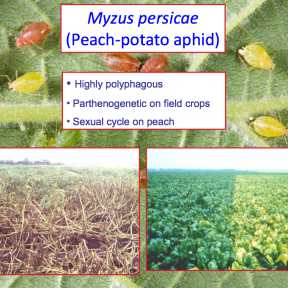
M. persicae is a small green aphid and is the most significant aphid pest of peach trees, causing decreased growth, shriveling of the leaves and the death of various tissues. It is also hazardous because it acts as a vector for the transport of plant viruses, such as potato virus Y and potato leafroll virus to members of the nightshade/potato family Solanaceae, and various mosaic viruses to many other food crops.
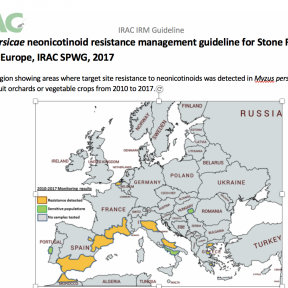
M. persicae is a globally significant crop pest that has evolved high levels of resistance to almost all classes of insecticide. To date, the neonicotinoids have remained an effective control measure however recent resistance monitoring work in southern Europe represent a threat to the long-term efficacy of this chemical class.
Green peach aphid resistance profile
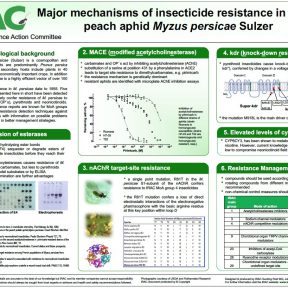
Known resistances occure in the following classes:
- Carbamates – Group 1A
- Organophosphates – Group 1B
- Pyrethroids – Group 3A
- Neonicotinoids – Group 4A
Susceptibility test methods
- IRAC Susceptibility Test Method 023 Nymphs (Feeding)
- IRAC Susceptibility Test Method 019 Adults, Nymphs (Dip) Feature video
- IRAC Susceptibility Test Method 001 All Stages of Development (Dip) Feature video
IPM strategies for green peach aphid resistance management
- Monitoring and economic thresholds
Pest populations should be monitored and insecticides only applied, if local economic threshold are met. - Sanitation, removal of volunteer- or alternative host plants
Elimination of volunteer plants before sowing or transplant reduces the risk of pests and diseases surviving between crops. - Management of Myzus persicae on over-wintering host plants or bridging crops.
Treatment of over-wintering hosts (Prunus spp.) can reduce Myzus persicae numbers and prevent movement to other crops. - Prevent fertilizer overuse
Aphids flourish on plants treated with nitrogen fertilizers. Avoiding overuse of nitrogen fertilizers can help reduce aphid population growth as well as save input costs. - Biological control, mainly used in greenhouses
The introduction of natural enemies such as parasitic wasps or predators is a common IPM strategy used under glass/greenhouse or in specialty crops.
Microbial control products based on entomopathogenic fungi can be applied using standard spray equipment as prescribed by their label recommendations. - Host plant resistance
For certain crops, varieties are available that are either tolerant or fully resistant toward plant diseased transmitted by Aphids.