Citrus red mite
Panonychus citri
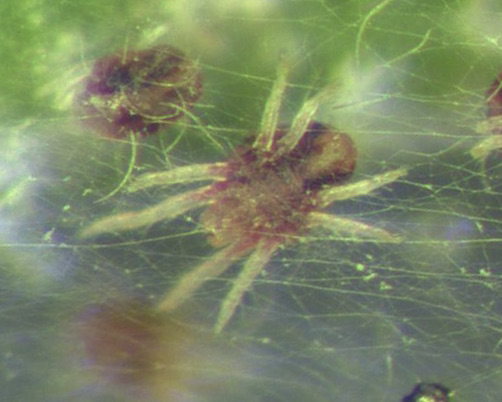
The Citrus red mite (Panonychus citri) is an economically important pest of citrus globally. Although citrus is the main host, it can also infest other fruit trees including pome and stone fruits. Adult mites and their…
Collapse pest biology
The Citrus red mite (Panonychus citri) is an economically important pest of citrus globally. Although citrus is the main host, it can also infest other fruit trees including pome and stone fruits. Adult mites and their nymphs feed on the fruit, leaves and twigs of the host plant and can cause defoliation, discoloration and reduced quality of the fruits. It is thought that the citrus rust mite originates in Asia, but global transportation of plant stock and ornamental citrus plants helps to spread the pest.
The citrus red mite that has a short generation time and high fecundity. These life cycle features combined with the long duration of protection needed to prevent damage to citrus crops often results in prolonged and repeated exposure to insecticides and acaricides. This persistent exposure can and has led to the development of pesticide resistance.

Resistance status
| Insecticide group | Region | Suspected mechanism |
|---|---|---|
| OrganophosphatesMoA 1B | Japan | Unknown |
| Pyrethroids-PyrethrinsMoA 3A | China | Esterase (metabolic) |
| Pyrethroids-PyrethrinsMoA 3A | Iran | F1538I (Target site) |
| Avermectins-MilbemycinsMoA 6 | China | GST (metabolic) |
| Avermectins-MilbemycinsMoA 6 | Turkey | GST (metabolic) |
| Clofentezine-Hexythiazox-DiflovidazinMoA 10A | China | Unknown |
| EtoxazoleMoA 10B | Turkey | Unknown |
| Organotin miticidesMoA 12B | Turkey | Unknown |
| TetradifonMoA 12D | Turkey | Unknown |
| AcequinocylMoA 20B | Japan | G126S (Target Site) |
| AcequinocylMoA 20B | Japan | A133T (Target Site) |
| BifenazateMoA 20D | China | G126S (Target Site) |
| BifenazateMoA 20D | Japan | A133T (Target Site) |
| BifenazateMoA 20D | Belgium | |
| BifenazateMoA 20D | Italy | |
| METI acaricides and insecticidesMoA 21A | China | H92R (target site) |
| METI acaricides and insecticidesMoA 21A | Iran | |
| METI acaricides and insecticidesMoA 21A | Japan | |
| Tetronic and Tetramic acid derivativesMoA 23 | China | Unknown |
| Tetronic and Tetramic acid derivativesMoA 23 | Turkey | Unknown |
| Beta-ketonitrile derivativesMoA 25A | China | Unknown |
| Compounds of Unknown or Uncertain MoAMoA UN | Turkey | Unknown |
| Compounds of Unknown or Uncertain MoAMoA UN | Japan | Unknown |
In several locations the citrus red mite has developed field derived resistance to several classes of insecticide/acaricides. Many reports of resistance have originated from China, Turkey and Iran, however this does not exclude that citrus red…
Collapse resistance summary
In several locations the citrus red mite has developed field derived resistance to several classes of insecticide/acaricides. Many reports of resistance have originated from China, Turkey and Iran, however this does not exclude that citrus red mite may have developed resistance in other regions of the world.
Resistance monitoring
Susceptibility test methods approved by IRAC.
- Test Method 004Adults / Dip