Fall armyworm
Spodoptera frugiperda
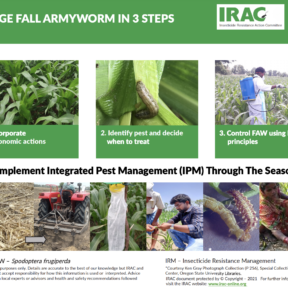
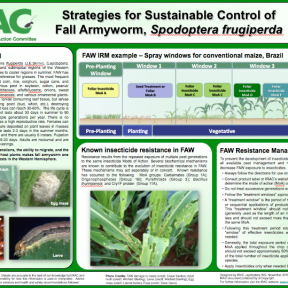
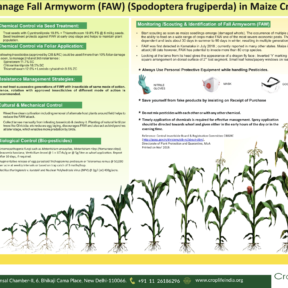
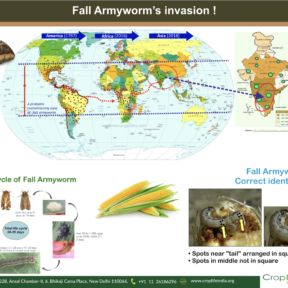
The fall armyworm is a highly polyphagous migratory lepidopteran pest species. It can colonize over 80 different plant species including many grasses, and crops such as alfalfa, soybean, sorghum, and corn. Eggs are laid in clusters of 50 or more in a single layer attached to foliage. Newly hatched larvae are pale green with black heads and during the second instar the head turns an orange-brown color. Fully grown larvae are 1.25 – 1.5 inches in length and vary in color from pale green to almost black, with a reddish-brown head. They closely resemble true armyworm, and corn earworm larvae in appearance.
Fall armyworm resistance profile
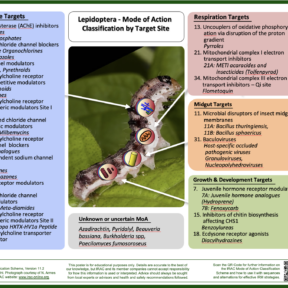
Several biochemical mechanisms may contribute to the evolution of insecticide resistance. These mechanisms may act separately or in concert. Known resistances occure in the following classes:
Carbamates, Group: 1A
Organophosphates, Group: 1B
Pyrethroids, Group: 3
Bacillus thuringiensis, Group: 11A
Susceptibility test methods
- IRAC Susceptibility Test Method 020 Larvae (Diet) Feature video