

Tomato leafminer
Tuta absoluta
T. absoluta is a pest of great economic importance in a number of countries. Its primary host is tomato, although potato, aubergine, common bean, and various wild solanaceous plants are also suitable hosts. T. absoluta is characterized…
Collapse pest biology
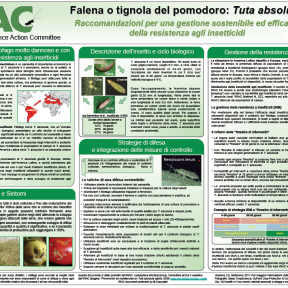
T. absoluta is a pest of great economic importance in a number of countries. Its primary host is tomato, although potato, aubergine, common bean, and various wild solanaceous plants are also suitable hosts. T. absoluta is characterized by high reproduction potential. Each female may lay up to 300 eggs and 10-12 generations can be produced each year. In tomato, it attacks all plant parts and crop developmental stages, although the larvae prefer apical buds, tender new leaflets, flowers, and green fruits and can cause up to 100% crop destruction.
Originally from Latin America, T. absoluta has recently spread to Europe, North Africa and the Middle East. Given its aggressive nature and crop destruction potential, it has quickly become a key pest of concern in these new geographies.
Other common names
Tomato leaf borer

Resistance status
| Insecticide group | Region |
|---|---|
| Avermectins-MilbemycinsMoA 6 | EU – Italy, Greece |
| Pyrethroids-PyrethrinsMoA 3A | EU – Italy, Greece |
| Nereistoxin analoguesMoA 14 | EU – Italy, Greece |
| BenzoylureasMoA 15 | EU – Italy, Greece |
| DiamidesMoA 28 | EU – Italy, Greece |
| IndoxacarbMoA 22A | EU – Italy, Greece |
| DiamidesMoA 28 | Middle East- Israel |
| SpinosynsMoA 5 | Brazil, UK |
Pest like T. absoluta, with high reproduction capacity and short generation cycle, are at higher risk of developing resistance to insecticides. This risk increases significantly when management of the pest relies exclusively on chemical control with…
Collapse resistance summary
Pest like T. absoluta, with high reproduction capacity and short generation cycle, are at higher risk of developing resistance to insecticides. This risk increases significantly when management of the pest relies exclusively on chemical control with a limited number of effective insecticides available. This situation usually leads to increase in the frequency of use and thus, increase in the selection pressure. In fact, field populations of T. absoluta resistant to a range of mode of action groups are already known from L. America countries, where this has been a key pest for decades.
Known resistances: Avermectins, Milbemycins – Group 6 Pyrethroids – Group 3A Nereistoxin analogues – Group 14 Benzoylureas – Group 15 Indoxacarb – Group 22A




 Tuta Absoluta Information Network